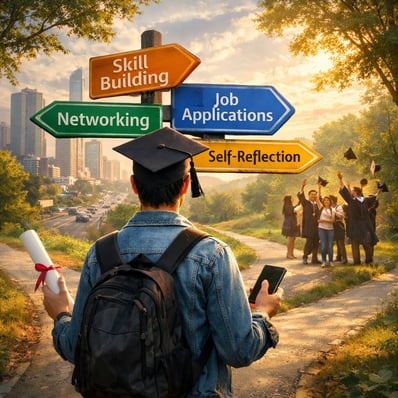
If you're applying for internships, scholarships, leadership positions, or your first full-time job, you've probably had the same thought as thousands of other students:
"Everyone else seems more qualified than me."
Maybe you see applicants with multiple internships, impressive resumes, leadership titles, or extensive professional networks.
It's easy to assume the only way to compete is by accumulating more experience.
But that's not necessarily true.
In today's hiring environment, employers and recruiters often review hundreds—or even thousands—of applications for a single opportunity. Most candidates have similar coursework, similar GPAs, and similar experiences.
The students who stand out aren't always the ones with the longest resumes.
They're the ones who know how to communicate their value.
If you're navigating a competitive job market as a student, this guide will show you how to differentiate yourself, make a stronger impression, and increase your chances of landing opportunities—even if you don't have the most experience.
The Biggest Myth About Standing Out
Let's start with a common misconception.
Many students believe:
"I need more experience before I can be competitive."
The reality is that employers hiring students often expect limited experience.
They're not comparing you to a professional with ten years in the workforce.
They're comparing you to other students.
And many of those students have very similar backgrounds.
What often separates successful candidates is not experience alone—it's presentation, preparation, and potential.
What Employers Really Notice
When reviewing applications, employers typically look for three things:
Can you do the work?
Do you have the skills and knowledge required?
Will you fit the team?
Can you communicate, collaborate, and contribute?
Are you motivated to grow?
Do you demonstrate initiative and a willingness to learn?
Most students focus only on the first question.
The strongest candidates address all three.
Strategy #1: Tell a Better Story
Many students list experiences.
Few explain what those experiences mean.
That's where opportunity exists.
Experience Doesn't Create Value—Impact Does
Consider these examples:
Applicant A
- Marketing Club Member
- Student Volunteer
- Retail Associate
Applicant B
- Helped organize campus marketing event attended by 200 students
- Coordinated volunteer scheduling for community fundraiser
- Recognized for exceptional customer service in retail role
The experiences may be similar.
The storytelling is not.
Focus on Outcomes
When describing experiences, ask:
- What did I accomplish?
- What problem did I solve?
- What skills did I demonstrate?
Results stand out more than responsibilities.
Strategy #2: Build a Personal Brand
Whether you realize it or not, you already have a personal brand.
The question is whether you're managing it intentionally.
What Is a Personal Brand?
Your personal brand is how others perceive you professionally.
It's shaped by:
- Your resume
- LinkedIn profile
- Online presence
- Communication style
- Reputation
Why It Matters
In a crowded applicant pool, employers often remember candidates who have a clear professional identity.
Examples:
- Future software developer passionate about AI
- Marketing student interested in consumer behavior
- Aspiring HR professional focused on workplace culture
Specificity helps people remember you.
Strategy #3: Optimize Your LinkedIn Profile
Recruiters frequently review LinkedIn profiles before making interview decisions.
Unfortunately, many students overlook this opportunity.
A Strong Profile Includes
- Professional photo
- Clear headline
- Complete About section
- Relevant experiences
- Skills and projects
Go Beyond Your Resume
Use LinkedIn to:
- Share insights
- Highlight projects
- Demonstrate interests
Activity signals engagement.
Strategy #4: Showcase Projects
One of the fastest ways to stand out without additional work experience is through projects.
Projects demonstrate initiative.
And initiative is something employers notice.
Examples of Strong Projects
Business Students
- Market research project
- Business plan
- Case competition
Technology Students
- Coding projects
- Apps
- Websites
Communications Students
- Content creation
- Podcast development
- Social media campaigns
Any Major
- Research projects
- Leadership initiatives
- Volunteer programs
Projects provide proof of your abilities.
Strategy #5: Network Intentionally
Many opportunities never reach job boards.
They come through conversations.
Why Networking Works
People hire people they know, trust, or have been referred to.
Networking helps you:
- Learn about opportunities
- Gain insights
- Build relationships
- Increase visibility
Start Small
You don't need to attend massive networking events.
Start by connecting with:
- Alumni
- Professors
- Mentors
- Professionals in your field
Simple conversations often create unexpected opportunities.
Strategy #6: Demonstrate Curiosity
Curiosity is one of the most underrated qualities in the hiring process.
Employers love candidates who want to learn.
How Curiosity Shows Up
Examples include:
- Asking thoughtful questions
- Exploring new skills
- Seeking feedback
- Pursuing professional development
Why Employers Value It
Skills can be taught.
Curiosity is harder to teach.
Candidates who continuously learn often outperform those who rely solely on existing knowledge.
Strategy #7: Customize Everything
One of the fastest ways to blend into an applicant pool is using generic applications.
Tailor Your Resume
Review the job description carefully.
Highlight:
- Relevant skills
- Relevant experiences
- Relevant achievements
Personalize Your Cover Letter
Avoid generic statements.
Instead, explain:
- Why you're interested
- Why you're a fit
- What attracts you to the organization
Customization demonstrates effort.
Strategy #8: Develop In-Demand Skills
If you're worried about experience, focus on skills.
Skills often create opportunities faster than titles.
Skills Employers Consistently Value
Communication
Written and verbal.
Problem-Solving
Analyzing challenges and finding solutions.
Teamwork
Collaborating effectively.
Adaptability
Learning and adjusting quickly.
Digital Literacy
Using technology confidently.
These skills apply across industries.
Strategy #9: Show Leadership Without a Title
Many students think leadership only counts if they're president of a club.
Not true.
Leadership is about influence and initiative.
Examples of Leadership
- Organizing an event
- Leading a project team
- Mentoring peers
- Solving a problem
Employers recognize leadership in many forms.
Strategy #10: Be Memorable During Interviews
Once you earn an interview, your goal changes.
Now you're competing through conversation.
Use Stories
Stories are easier to remember than facts.
Instead of saying:
"I'm a strong communicator."
Tell a story that demonstrates communication.
Show Enthusiasm
Employers often hire candidates who are genuinely excited about the opportunity.
Energy matters.
Preparation matters.
Authenticity matters.
The Hidden Advantage Most Students Ignore
One of the most powerful ways to stand out has nothing to do with experience.
It's consistency.
Follow Through
Respond promptly.
Show up prepared.
Meet deadlines.
Send thank-you notes.
Many candidates fail to do basic things consistently.
Reliability becomes a competitive advantage.
What Makes Students Memorable
Think about the students professors recommend.
Or the students recruiters remember.
Usually, it's not because they had the longest resumes.
It's because they:
- Took initiative
- Asked good questions
- Demonstrated professionalism
- Followed through
- Continued learning
These behaviors create trust.
And trust creates opportunities.
A Simple Formula for Standing Out
If you're feeling overwhelmed, focus on this formula:
Skills
Continue developing your abilities.
Visibility
Let people see your work.
Relationships
Build meaningful connections.
Initiative
Take action before you're asked.
Together, these four elements create a powerful advantage.
Final Thoughts
Standing out in a competitive applicant pool isn't about having the most experience.
It's about making the most of the experience you already have.
By telling stronger stories, building your personal brand, developing relevant skills, networking intentionally, and demonstrating initiative, you can differentiate yourself from other candidates.
Remember:
Employers aren't just looking for the most experienced applicant.
They're looking for someone who shows potential, professionalism, and a willingness to grow.
And those qualities are available to every student—starting today.
In a crowded applicant pool, your goal isn't to be identical to everyone else.
It's to be memorable for the right reasons.