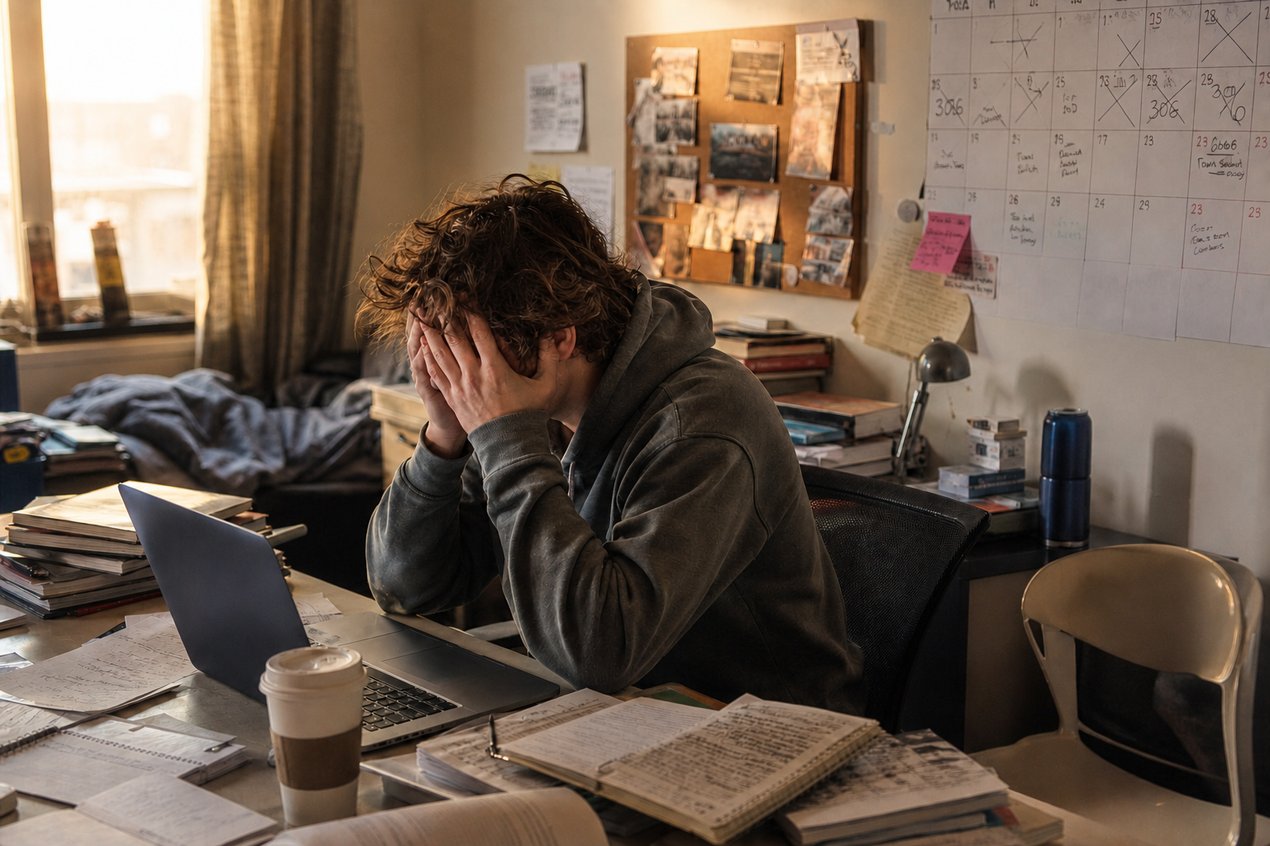
College is often described as one of the most exciting times of your life. It's a season filled with opportunities to learn, build friendships, explore career paths, and prepare for your future.
But for many students, it's also one of the most demanding.
Balancing coursework, internships, part-time jobs, extracurricular activities, financial responsibilities, family commitments, and a social life can quickly become overwhelming. Somewhere between trying to "do it all" and striving to succeed, many students begin experiencing something they don't recognize until it's already affecting their well-being:
Burnout.
Burnout isn't simply feeling tired after a long week or stressed before finals. It's a state of ongoing emotional, mental, and physical exhaustion that can make even simple tasks feel difficult.
The encouraging news is that burnout isn't a sign of failure, weakness, or lack of motivation. It's often a signal that your mind and body need a different approach.
If you've been feeling overwhelmed, constantly exhausted, or disconnected from things you once enjoyed, learning to recognize the signs of burnout is the first step toward resetting and regaining balance.
What Is Burnout?
Burnout is prolonged exhaustion caused by ongoing stress without enough time to recover.
Unlike ordinary stress, burnout doesn't disappear after a good night's sleep or a relaxing weekend.
Instead, it builds gradually over time.
Students often experience burnout when they continuously push themselves without allowing opportunities for rest, reflection, and recovery.
While college naturally includes busy seasons, living in a constant state of pressure can eventually affect both academic performance and overall well-being.
Why College Students Are Especially Vulnerable
Today's students face unique challenges that previous generations didn't always experience.
Many are balancing:
- Full course loads
- Part-time or full-time jobs
- Internships
- Student organizations
- Financial pressure
- Family responsibilities
- Career uncertainty
- Constant digital connectivity
On top of these responsibilities, social media can create the impression that everyone else is succeeding effortlessly.
The reality is that many students are struggling quietly behind the scenes.
Common Signs of Student Burnout
Burnout doesn't always appear suddenly.
It often develops through small changes that are easy to dismiss.
Learning to recognize these warning signs can help you take action before burnout becomes more severe.
1. Constant Exhaustion
You wake up tired.
You feel tired throughout the day.
Even after sleeping, your energy doesn't seem to return.
Persistent fatigue is one of the most common signs of burnout.
2. Difficulty Concentrating
Assignments that once took an hour now take three.
Reading feels harder.
Studying becomes frustrating.
Burnout often affects attention, memory, and focus.
3. Loss of Motivation
You may begin asking yourself:
"Why bother?"
Tasks that once excited you may now feel overwhelming or meaningless.
Losing motivation doesn't necessarily mean you've become lazy—it may mean you're mentally depleted.
4. Increased Irritability
When you're burned out, small inconveniences can feel much bigger than they normally would.
You may notice yourself becoming:
- More impatient
- Easily frustrated
- Emotionally drained
This happens because chronic stress leaves fewer mental resources for handling everyday challenges.
5. Procrastination
Ironically, burnout often causes students to procrastinate more.
Not because they don't care.
Because they feel overwhelmed by the size of their responsibilities.
Avoiding tasks temporarily reduces stress—but usually creates even more pressure later.
6. Feeling Disconnected
Burnout can make you withdraw from activities and relationships.
You may stop attending events, avoid friends, or lose interest in hobbies you once enjoyed.
Social connection often declines when emotional energy is depleted.
7. Physical Symptoms
Stress doesn't only affect your mind.
It can also affect your body.
Common physical symptoms may include:
- Headaches
- Muscle tension
- Difficulty sleeping
- Changes in appetite
- Frequent illness
- Digestive discomfort
Your body often signals stress before you consciously recognize it.
Burnout vs. Being Busy
It's important to understand the difference.
Being busy means you have a full schedule.
Burnout means your physical and emotional resources have been depleted.
You can enjoy being busy if your work feels meaningful and balanced.
Burnout happens when effort continues without sufficient recovery.
Why Ignoring Burnout Makes It Worse
Many students convince themselves:
"I'll rest after finals."
"Things will calm down next month."
"I just need to push through."
Sometimes that's necessary during short periods.
But if recovery is continually postponed, burnout often becomes more difficult to overcome.
Ignoring warning signs rarely makes them disappear.
Listening to them gives you an opportunity to make healthy adjustments.
Step 1: Give Yourself Permission to Pause
Many students believe taking a break means falling behind.
In reality, strategic rest often improves productivity.
A short pause can help you:
- Clear your mind
- Improve focus
- Restore motivation
- Reduce stress
Rest is part of progress—not the opposite of it.
Step 2: Simplify Your Commitments
Look honestly at your schedule.
Ask yourself:
- What truly matters right now?
- What can wait?
- What can I delegate?
- Is there anything I can say no to?
Reducing unnecessary commitments creates space to recover.
Step 3: Focus on Basic Needs
When life becomes overwhelming, simple habits often suffer first.
Start by rebuilding your foundation.
Prioritize:
- Consistent sleep
- Nutritious meals
- Hydration
- Physical movement
- Fresh air
Small improvements in physical well-being often improve mental clarity.
Step 4: Stop Comparing Yourself to Others
Comparison fuels burnout.
Social media rarely shows:
- Rejected applications
- Sleepless nights
- Financial struggles
- Stress
- Self-doubt
Everyone has challenges.
You simply don't see all of them.
Focus on your own progress instead of someone else's timeline.
Step 5: Reconnect With Activities You Enjoy
Burnout can make life feel like one long checklist.
Make time for activities that recharge you.
Examples include:
- Reading for fun
- Spending time outdoors
- Listening to music
- Creating art
- Exercising
- Spending time with friends
Joy isn't a distraction from success.
It's part of a balanced life.
Step 6: Ask for Support
You don't have to manage everything alone.
Reach out to:
- Friends
- Family
- Professors
- Academic advisors
- Mentors
- Campus support services
Many colleges offer counseling and wellness resources that can provide additional support.
Asking for help is a sign of self-awareness—not weakness.
Step 7: Redefine Productivity
Burnout often comes from believing your value depends on constant achievement.
Instead, redefine productivity.
Productivity isn't about doing everything.
It's about making meaningful progress while protecting your well-being.
Some days, success might mean:
- Completing one assignment
- Taking a walk
- Getting enough sleep
- Asking for help
Progress looks different every day.
Build a Burnout Prevention Routine
Preventing burnout is easier than recovering from it.
Consider building these habits into your weekly routine:
- Plan your week in advance.
- Schedule breaks.
- Exercise regularly.
- Protect your sleep.
- Limit unnecessary screen time.
- Make time for hobbies.
- Celebrate small accomplishments.
Consistency matters more than perfection.
Remember Why You Started
When burnout makes everything feel overwhelming, reconnect with your purpose.
Ask yourself:
- Why am I pursuing this degree?
- What kind of future am I building?
- What goals matter most to me?
Purpose doesn't eliminate stress.
But it can help you navigate difficult seasons with greater resilience.
When to Seek Additional Support
Everyone experiences stress.
However, if exhaustion, sadness, anxiety, or difficulty functioning persist or begin interfering significantly with your daily life, consider reaching out to a trusted healthcare professional or your campus counseling center.
Seeking support early can make a meaningful difference and help you develop strategies that fit your situation.
Final Thoughts
Burnout doesn't happen because you aren't strong enough.
It often happens because you've been strong for too long without enough opportunities to recover.
College is meant to challenge you—but it shouldn't require sacrificing your well-being.
Learning to recognize the signs of burnout, set healthy boundaries, and prioritize recovery is an investment in both your academic success and your future career.
Remember:
You don't have to earn rest.
You don't have to prove your worth by staying busy every minute of the day.
Success isn't measured by how exhausted you become.
It's measured by your ability to grow, learn, and thrive over time.
Give yourself permission to slow down when needed.
Protect your energy.
Celebrate your progress.
And remember that taking care of yourself isn't stepping away from your goals—it's one of the most important ways to achieve them.