If you're a college student or recent graduate, you've probably looked at a job posting and thought:
"How am I supposed to get experience if every job requires experience?"
It's one of the most frustrating parts of starting your career.
Many students assume they need multiple internships, years of work experience, or an impressive list of accomplishments before they can create a strong resume.
The truth is that employers hiring entry-level candidates don't expect you to have years of professional experience.
What they do expect is potential.
A well-crafted resume can demonstrate that potential—even if you've never held a traditional full-time job.
The key is understanding how to present the experiences you already have in a way that shows employers you're ready to contribute.
If you're wondering how to create a resume with no experience, this guide will walk you through exactly what to include, what to leave out, and how to stand out from other applicants.
First, Stop Thinking You Have No Experience
One of the biggest resume mistakes students make is assuming they have nothing worth including.
Experience isn't limited to paid jobs.
In fact, many employers reviewing entry-level applications are looking at a broader picture.
You may already have valuable experience from:
- Class projects
- Volunteer work
- Student organizations
- Leadership roles
- Research assignments
- Academic competitions
- Freelance work
- Campus involvement
- Part-time jobs
- Personal projects
The goal isn't to prove you've already done the job.
The goal is to show that you've developed skills that transfer to the workplace.
What Employers Really Look For
When hiring entry-level candidates, employers know they're not reviewing experienced professionals.
Instead, they're evaluating:
- Communication skills
- Problem-solving ability
- Initiative
- Reliability
- Teamwork
- Adaptability
- Leadership potential
- Willingness to learn
Your resume should help them see evidence of these qualities.
The Ideal Entry-Level Resume Structure
A strong entry level resume doesn't need to be complicated.
In fact, simpler is usually better.
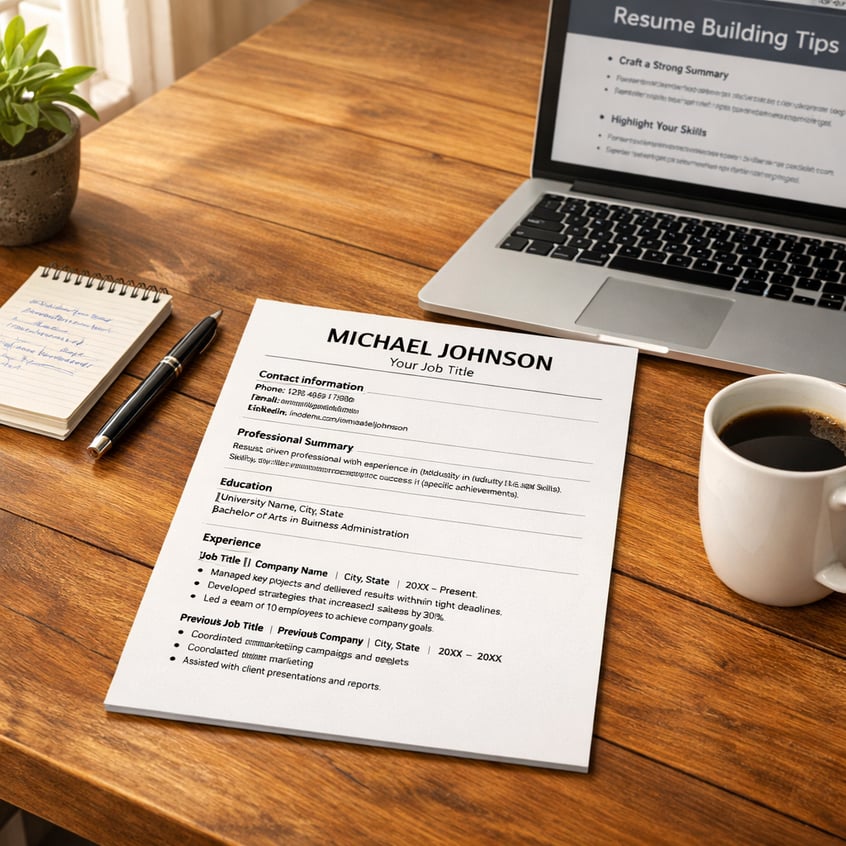
Here's a recommended format:
Contact Information
Include:
- Full name
- Phone number
- Professional email address
- LinkedIn profile (if updated)
Avoid:
- Nicknames
- Unprofessional email addresses
- Full mailing addresses
Professional Summary
This section is optional but helpful for students.
Example:
"Motivated college student pursuing a degree in Business Administration with experience leading team projects, organizing campus events, and developing strong communication skills. Seeking opportunities to contribute, learn, and grow in an entry-level professional role."
Keep it concise.
Three to four lines is enough.
Education
For many students, education should appear near the top.
Include:
- School name
- Degree
- Major
- Expected graduation date
- GPA (if strong)
Example:
Bachelor of Science in Marketing
Expected Graduation: May 2027
GPA: 3.7
How to Turn Coursework Into Experience
One of the best ways to strengthen a student resume is through relevant coursework and projects.
Employers care about applied learning.
Instead of listing classes, describe what you accomplished.
Weak Example
Relevant Coursework:
- Marketing
- Business Communication
- Statistics
Strong Example
Marketing Strategy Project
- Collaborated with a team of five students to create a comprehensive marketing plan for a local business.
- Conducted market research and presented recommendations to faculty panel.
- Developed data analysis and presentation skills.
Notice the difference?
The second version demonstrates actual experience and skills.
Include Academic Projects
Projects often provide the strongest evidence of your capabilities.
Examples include:
- Research papers
- Business plans
- Engineering designs
- Coding projects
- Presentations
- Case studies
Treat these like professional experiences.
Focus on:
- What you did
- How you did it
- What results you achieved
Student Organizations Matter More Than You Think
Many students underestimate the value of campus involvement.
Student organizations help develop:
- Leadership
- Communication
- Teamwork
- Event planning
- Project management
All of these are highly valued by employers.
Example
Student Marketing Association
Vice President
- Coordinated weekly meetings for 30+ members.
- Organized networking events with industry professionals.
- Increased event attendance by 25% through targeted promotional efforts.
That's real experience.
Volunteer Experience Counts
Volunteer work can be just as valuable as paid employment.
In many cases, employers view volunteer experience positively because it demonstrates initiative and commitment.
Examples:
- Community service
- Fundraising
- Tutoring
- Nonprofit work
- Event coordination
Example
Volunteer Coordinator
Local Food Bank
- Managed volunteer scheduling and event logistics.
- Assisted in organizing food drives serving over 200 families.
- Collaborated with community partners to increase participation.
Don't Ignore Part-Time Jobs
Maybe you've worked retail, food service, or customer service.
Some students assume these jobs aren't relevant.
They are.
Part-time jobs demonstrate:
- Responsibility
- Customer service
- Time management
- Communication
- Reliability
Employers know these skills transfer to professional environments.
Example
Sales Associate
- Assisted customers and resolved concerns in a fast-paced retail environment.
- Maintained accuracy while processing transactions.
- Contributed to a team that consistently met sales goals.
Showcase Skills Strategically
The skills section should support—not replace—your experiences.
Focus on relevant skills such as:
Technical Skills
- Microsoft Excel
- PowerPoint
- Google Workspace
- Canva
- Adobe Creative Suite
- SQL
- Python
- CRM platforms
Professional Skills
- Public speaking
- Team collaboration
- Research
- Project management
- Event planning
Avoid listing generic buzzwords without evidence.
If you claim leadership, make sure your resume demonstrates leadership.
Use Numbers Whenever Possible
One of the easiest ways to strengthen a resume is through measurable results.
Compare these examples:
Weak
Helped organize campus events.
Strong
Helped organize four campus events attended by more than 300 students.
Numbers create credibility.
Look for opportunities to quantify:
- Team size
- Attendance
- Revenue
- Participation
- Time saved
- Growth achieved
Common Resume Mistakes Students Make
Avoid these common pitfalls.
1. Making the Resume Too Long
For most students:
One page is ideal.
Focus on quality, not quantity.
2. Using Generic Objectives
Avoid statements like:
"Seeking a position where I can utilize my skills."
Employers see this constantly.
Be specific.
3. Listing Duties Instead of Accomplishments
Don't just describe responsibilities.
Show impact.
4. Including Irrelevant Information
You don't need:
- High school achievements (unless you're a first-year student)
- Personal interests unrelated to the role
- References
5. Sending the Same Resume Everywhere
Customize your resume for each opportunity.
Review the job description and adjust your content accordingly.
How to Beat Applicant Tracking Systems (ATS)
Many companies use software to screen resumes.
To improve your chances:
- Use standard section headings
- Include keywords from the job description
- Avoid excessive graphics
- Use simple formatting
This helps ensure your resume gets seen by a human recruiter.
What If You Still Feel Underqualified?
Here's something every student should remember:
Most job descriptions describe an ideal candidate—not a perfect requirement checklist.
If you meet many of the qualifications and are genuinely interested, apply.
Don't eliminate yourself before the employer has a chance to evaluate you.
Many successful professionals landed their first jobs before they felt fully ready.
A Better Way to Think About Your Resume
Instead of asking:
"Do I have enough experience?"
Ask:
"Have I demonstrated the skills and potential to succeed?"
That's what employers are trying to determine.
Your resume isn't a record of everything you've done.
It's a marketing document designed to show why you're worth interviewing.
Final Thoughts
Building a resume with no experience can feel intimidating, but the reality is that most students have more valuable experience than they realize.
Class projects, leadership roles, volunteer work, part-time jobs, and campus involvement all help tell your story.
The key is learning how to present those experiences in a way that highlights your skills, accomplishments, and potential.
Remember:
You don't need years of professional experience to earn interviews.
You need a resume that demonstrates initiative, capability, and a willingness to learn.
Because every professional started somewhere—and your first opportunity could be just one application away.